Nobody Claps the Sound Man: Britain's Comedy Backroom Crew Deserve a Round
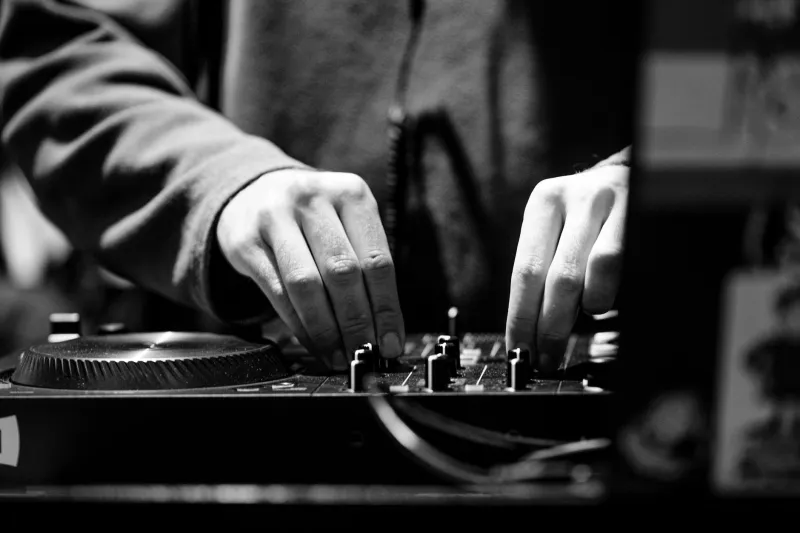
There is a moment, roughly eight minutes into any decent comedy night, when the entire evening hangs on a single question: has anybody checked the second mic cable?
If the answer is yes, you'll never think about it again. If the answer is no, you'll spend the next ninety minutes watching a grown adult mime their way through a set while a cable crackles like a bowl of Rice Krispies in a thunderstorm. Comedy is a fragile business. It is held together by timing, confidence, and a surprising quantity of gaffa tape applied by someone whose name appears on no poster.
The Mic Cable That Decides Your Evening
Every comic has a war story. Mine involves a back room above a pub in the Midlands, a microphone that worked for the compère and then simply gave up the ghost halfway through my opener, and a sound tech called Dev who slid across the floor on his knees like a goalkeeper saving a penalty, swapped the cable without making a sound, and was back behind his desk before I'd finished my first punchline.
Nobody applauded him. Nobody ever does. He got a nod from me and a pint he didn't ask for, and that was that.
The truth is that the difference between a good gig and a bad one is frequently a bloke with a spare XLR lead and the patience of a saint. In 2026, when a decent wireless mic set costs more than some promoters' entire monthly budget, that bloke is the closest thing the circuit has to a miracle worker. He can hear a buzz from the back of the room before the front row can. He knows the difference between a mic that's picking up feedback and a comic who's dying onstage — and, crucially, he knows which one to fix.
The Door Staff Read the Room Before You Do
Before a single joke lands, the door staff have already clocked everything. Who's had three pints before the show. Who's on a birthday do and planning to become the main event. Who's been dragged along by a partner and is already scrolling their phone. Good door staff are not bouncers. They are psychoanalysts in black fleeces.
Ask any promoter who's been in the game for more than a decade and they'll tell you the same thing: the venue's front-of-house team is the difference between a minor heckle and an incident. They know which table to seat the loud lot at, which aisle to keep clear and which punter needs a quiet word before the lights go down. And when a heckler does kick off, it's rarely the comic who defuses it. It's a polite but immovable member of staff explaining that the gentleman's taxi has arrived.
They're the reason you can laugh freely. They're the reason nobody has to look over their shoulder.
Lighting Cues and the Alchemy of a Heckle
There's a myth that comedy is a solo art form. It isn't. It's a three-way conversation between the comic, the audience and whoever is operating the lights.
A good lighting cue can turn a heckle into a punchline. House lights up when the room is getting restless; a tight spot when a comic is going in for the kill; a blackout timed perfectly so the crowd laughs and forgets about the bloke in row four who has opinions. It looks effortless. It is not. The person pressing the buttons is usually watching the stage, the clock and the audience simultaneously, like a swan doing three jobs at once.
And if you've ever seen a gig where the lights come up abruptly on a sensitive story, or the stage stays dark while the compère gestures at a stool nobody can see, you've seen what happens when that person is missing. The jokes don't get worse. They just stop mattering.
The Bar Staff, the Compère's Silent Partner
The bar staff have a role that no promoter will ever put in a contract: they're the pace-setters. They know when to pour quickly and when to slow down. They know that a full room with empty glasses is a room about to start fidgeting. A good bar team keeps the show oiled; a bad one lets the interval drag until the audience's attention has wandered off to the kebab shop.
And they hear everything. Every terrible open spot. Every heckle. Every punchline that died so quietly you could hear a crisp packet being opened in the back row. If you want an honest review of the night, ask the bar staff. They've got a better ear for comedy than most critics, and none of the ego.
Practical Checks Promoters Won't Admit They Need
Here's the bit the public rarely hears. Most promoters will happily tell you about the headliner and the ticket numbers. Very few will admit that the night was saved by a check — or nearly ruined by the absence of one. A short, practical, slightly grumpy list:
- Spare cables. More than one. Assume the first one is cursed.
- A written running order. Not a WhatsApp plan. Not a promise. Something on paper that the tech and the door staff can see.
- A named technician. Not 'we'll get someone'. 'Someone' is a ghost who doesn't turn up.
- Working stage lights. At minimum, enough to see a face. This isn't a séance.
- A soundcheck. Even a tiny one. Ten minutes means the difference between a gig and a hostage situation.
- A quiet word about hecklers before the show. Not after. Before.
None of this is glamorous. All of it is the difference between a night people remember and a night people leave at the interval.
Buy Them a Drink (and Learn Their Names)
So the next time you're in a back room in Leeds or a basement in Bristol or a function room in a working men's club that still smells faintly of 1987, look past the compère and the headliner. Look for the bloke by the desk, the one with the roll of gaffa tape and the expression of someone who has seen things. Look for the door staff quietly watching. Look for the bar team resetting for the second half.
They aren't the headliners. They're the reason there's a show at all. And if you ever clap for a comic, spare a second to clap for the person who made sure the microphone worked. They deserve it more than most.
They won't thank you. They'll be busy. But they'll hear it.