The Jug, the Stool and the Wall: Britain’s Comedy Rooms Run on Furniture and Faith
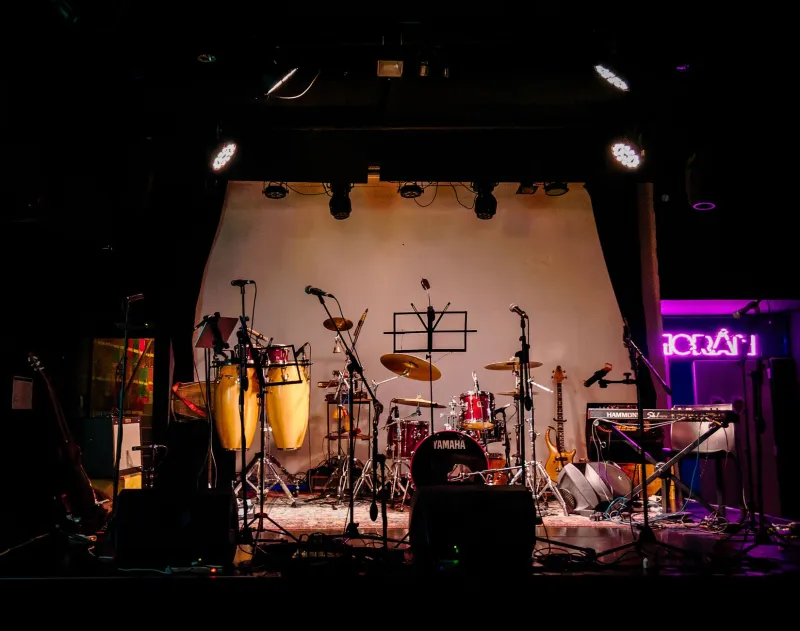
There is a moment, about ten minutes before doors, when a British comedy room tells you exactly what kind of night you are in for. It is not the lighting desk. It is not the poster sellotaped to the door with a picture of a comic pulling a face like a man who has just sat on a wasp. It is the furniture. A cloudy water jug. A brick wall. A stool that has clearly seen things. Put them together and you have the real stage management of the nation’s comedy circuit.
Line-ups sell tickets, and compères keep the room from turning feral, but the props set the emotional weather. A good jug says somebody cares. A bad stool says somebody once cared, in 1998, and then went to lunch. The brick wall says nothing at all, which is precisely its job.
The Water Jug: A Barometer With a Handle
No object on a comedy stage is more honest than the water jug. It is never full, never empty, and never quite clean. It sits on a small table beside the mic like a diplomat at a difficult summit. If the jug is fresh, with actual ice and a couple of lemon slices, you are in a room run by someone with a system. If it is half-full and slightly warm, you are in a room run by someone with a pub licence and a dream.
Room techs speak about the jug with the weary affection of people who have refilled the same plastic pitcher since the smoking ban. One technician told me the golden rule: fill it before doors, not after the first act, because the first act will always knock it over during the walk-on. “You can hear a jug spill from the back of the room,” he said. “It sounds like a small animal giving up.”
Comics have their own code. Never drink from the jug after the third act. Never ask for a glass unless you enjoy being handed a pint glass with a lipstick smudge and the word ‘FOSTER’S’ on it. And never, ever comment on the water unless you want the audience to spend the next forty minutes wondering whether you are about to die on stage. The jug is not there to hydrate you. It is there to reassure the room that this is a professional engagement, even when the microphone smells faintly of chips.
The Brick Wall: Britain’s Most Honest Critic
The exposed brick wall is the unofficial backdrop of British comedy. It appears in every poster, every Netflix special and every room above a pub where the ceiling is low enough to give a tall comic a haircut. It is also a terrible acoustic device. Brick does not absorb sound; it hands it back to you with interest. Tell a joke near a bare brick wall and you can hear your own punchline return a split second later, slightly angrier and wearing a coat.
Paint it black and the wall becomes moody. Paint it white and it becomes a cinema screen for every flyer that has ever been Blu-Tacked to it. Leave it bare and it becomes a geological reminder that this room was once a warehouse, a betting shop or a place where someone named Keith stored potatoes. Comics learn to project into brick. Audiences learn to lean forward. The wall does not laugh, but it does keep time.
One circuit comic described the brick wall as “the only heckler that never lies.” If the room is dead, the wall tells you. If the room is warm, the wall still tells you, but with slightly less contempt. It is the closest thing comedy has to a mirror, assuming your mirror is made of masonry and smells of old beer.
The Stool: An Act of Trust
The comedy stool is not furniture. It is a contract. You will sit on it, and it will pretend to hold you. Most stools in British comedy rooms have three legs, one of which is shorter than the others by an amount that can only be measured in hope. Some have a small spirit-level sticker on the seat, which is the stool equivalent of a health warning. Others have been repaired with gaffer tape so many times they look like a mummified drum kit.
A wobbly stool changes a performance. The comic cannot commit to a physical bit without calculating the risk of a fall. The audience watches the stool instead of the story. There is a particular sound a stool makes when it scrapes across a sticky stage floor: half furniture, half scream. It is the sound of a comic adjusting their entire personality to avoid a trip to A&E.
And yet, the stool is beloved. It gives the room a focal point. It lets a comic perch, lean, and deliver a punchline like a man sharing gossip over a garden fence. When a stool is solid, it disappears. When it wobbles, it becomes a co-star. The best rooms have stools that look dangerous but are secretly fine. The worst rooms have stools that look fine and are secretly dangerous. That is the comedy circuit in one sentence.
The Mic Stand: Surviving a Thousand Angry Grabs
The microphone stand is the unsung hero of the whole operation. It has been grabbed, kicked, lowered, raised, wrapped in gaffer tape and used as a makeshift walking stick by a comic who forgot his glasses. The clip is either too tight or too loose. The base is either missing a rubber foot or has acquired a new one made from a beer mat. And the height adjustment has two settings: ‘knee-high child’ and ‘lamp post’.
Techs will tell you that a mic stand is not a toy, a prop or a weapon, although it has been all three by closing time. Comics will tell you that a good mic stand is one that stays where you put it. A great mic stand is one that survives a comic using it to point at the audience like a disappointed headteacher. The stand takes the abuse so the comic does not have to. It is the silent supporting cast member that never gets a bow.
Why the Furniture Is the Real Line-Up
Britain’s comedy rooms are not defined by their headliners. They are defined by the jug that nobody refills, the wall that swallows punchlines, the stool that wobbles like a bad decision and the mic stand held together with optimism. These objects give a room its texture. They tell the audience whether to relax, whether to lean in, whether to expect chaos. They tell the comic whether to trust the night.
So next time you settle into a comedy gig and the compère apologises for the water jug, look again. That half-full pitcher is not a failure of hospitality. It is a character. The brick wall is not a design choice. It is a critic. The stool is not a seat. It is a dare. And the mic stand is not equipment. It is a survivor. The line-up may get the laughs, but the furniture gets the last word.