The Door Says Maybe: Plus-Ones, Blaggers and the Comedy Club's Cruellest Audit
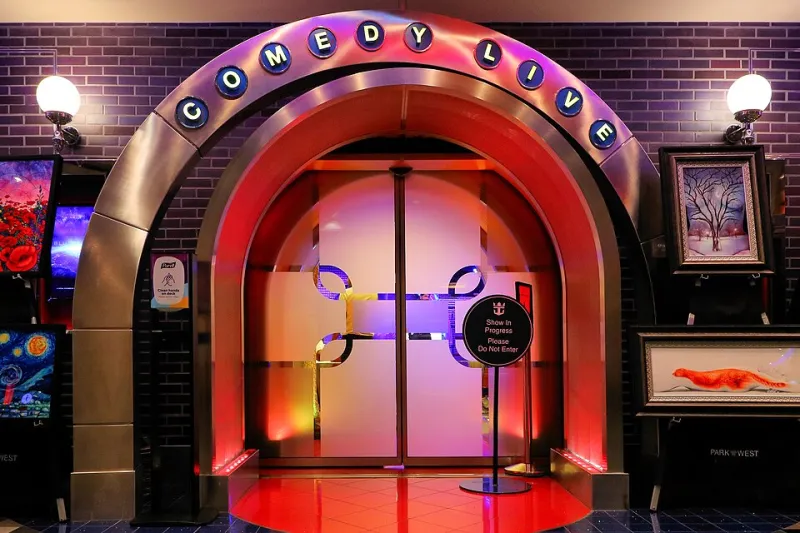
Photo: Larry D. Moore, CC BY 4.0, via Wikimedia Commons
Every comedy club has two stages. The first is the one with the mic, the stool and the brick wall. The second is the one by the door, where a person with a clipboard holds court over a list that is somehow both sacred and completely made up. The guest list is the smallest piece of paperwork in the building and the one most likely to cause a diplomatic incident before the support act has even said hello.
The Comp List Is a Fairy Tale With a Spreadsheet
Comps are the currency of the circuit. A promoter promises a handful to the headliner, a couple to the support, maybe one to the local reviewer who once gave them a nice write-up in a free listings mag. By the time those names reach the door, the list has been through more edits than a government budget and twice as many arguments. The comic thinks they have four comps. The promoter thinks they have two. The door staff have a printout that appears to have been assembled by a caveman with a grudge.
What nobody tells you is that the guest list is not really a list. It is a negotiation. It is a mood. It is a bouncer squinting at a surname that could be either 'Wright' or 'Wrght' while a queue of paying punters watches like a jury. The clipboard does not blink. It simply waits, and judges.
Plus-One Is a Verb, Not a Right
A plus-one sounds like a small, polite thing. It is not. It is a test of social arithmetic. The comic has a comp. The comic's mate assumes the comp includes a mate. That mate has a partner. The partner has a sister who is 'really into comedy'. Within three text messages, one free ticket has become a coach party, and the comic is hiding by the fire exit pretending to take a call from their agent.
The unwritten rule is simple: a plus-one is granted, not assumed. If you are offered one, say thank you. If you are not offered one, do not ask why. The comic is not being mean. They are trying to avoid a conversation with the promoter that begins with 'so, about the list' and ends with someone's name being crossed out in biro so hard it tears the paper.
The Blagger's Prayer: 'I Know the Promoter'
Every door has a blagger. They arrive ten minutes after the show has started, wearing a jacket that suggests they once attended a networking event, and they open with the sacred incantation: 'I know the promoter.' Which promoter? 'Dave.' Which Dave? 'You know, Dave.' The door person does not know Dave. Nobody knows Dave. Dave is a ghost who haunts every guest list in Britain.
The blagger is not always a villain. Sometimes they genuinely do know someone. Sometimes they are a friend of a friend who was told 'just come down, it'll be fine', which is the most dangerous sentence in comedy. But the blagger's great flaw is believing that enthusiasm is a form of ID. It is not. The door person has a capacity limit, a fire officer's patience and a paying audience who bought tickets in advance. The blagger has a story. The clipboard has facts.
Door Diplomacy: The Bouncer as Border Control
The person on the door is not the enemy. They are the border control of the comedy night. They have to manage latecomers, lost tickets, group bookings, stag dos, the occasional punter who insists they are 'practically a local' because they once had a pint in the pub next door. They also have to enforce the promoter's list, which may have been written in a hurry and may contain a name that sounds like a sneeze.
Good door staff perform a kind of quiet diplomacy. They say 'give me a second' while they scan the list. They say 'we're full' in a tone that suggests it is a meteorological event, not a personal rejection. They say 'I'll see what I can do' when they mean 'I will not see what I can do'. It is a masterclass in soft power, conducted under a strip light, with a queue watching.
How to Ask a Comic for Tickets (Without Becoming the Story)
If you want comps, follow the field guide. Ask early, not on the night. Be specific about numbers. Do not ask for six when you mean two. Do not say 'it's my birthday' unless it actually is, and even then, expect a shrug. Offer to buy the comic a pint, but do not be offended if they say no; they are probably trying to remember their set. Most importantly, accept the answer. A 'maybe' from a comic is not a yes. It is a no with admin.
The comedian's perspective is worth remembering. They want a full room. They also want to be invited back. Asking a promoter for extra comps is like asking your landlord for a rent reduction: theoretically possible, socially awkward, and rarely worth the follow-up email. The comic who protects the list is not a jobsworth. They are a person with a career, a mortgage and a promoter who has a spreadsheet.
The Quiet Humiliation and the Small Victories
Being turned away from a comedy club is a peculiar kind of shame. You walk past the merch table, past the posters, past the queue that is definitely laughing at you, even if they are not. You text your mate: 'not on the list, no worries, have a good one.' You do not mention that you are now standing outside a Wetherspoons wondering where your life went wrong.
But there are small victories. The name is found. The wristband is applied. The door person gives you a nod that says 'you may enter, but do not push it'. You take your seat, the lights go down, and the clipboard is forgotten. Until the interval, when someone asks you to get their mate in, and you realise you have become part of the problem.
The guest list is never fair. It is a compromise dressed up as a system, run by tired people with good intentions and a biro. Respect the clipboard, know your plus-one, and never claim to know Dave. That way lies madness, and a very long walk to the nearest bus stop.