Loose Change, Tight Fists and the Interval Raffle: Surviving the Comedy Club Collection

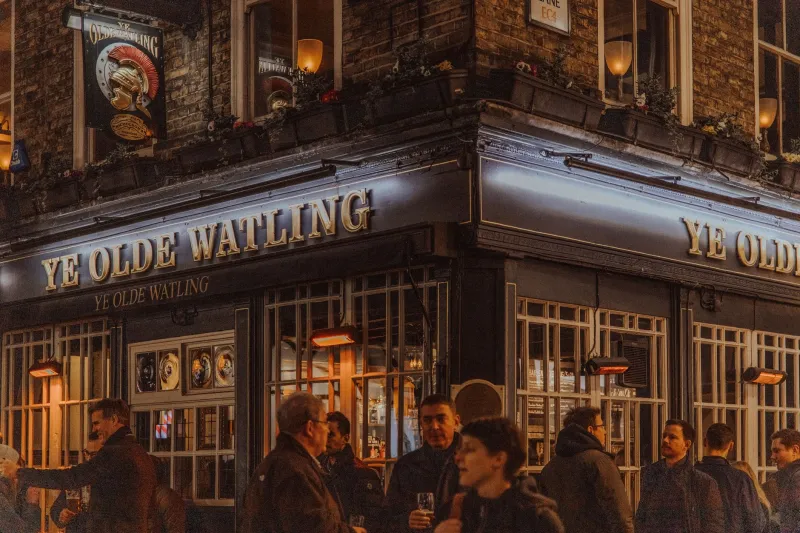
Photo by Photo by Fábio Alves on Unsplash on Unsplash
There is a moment in every British comedy club when the laughter dies, the lights go up a notch, and a man with a plastic bucket walks toward you like a vicar with a gambling problem. You have already paid for your ticket. You have already paid for your warm lager. And yet here comes the collection plate, rattling with coins and the ghosts of every awkward handshake since the working men’s club circuit began.
This is not charity. This is circuit economics in a Tupperware tub. The bucket, the interval raffle and the exit shake are the unholy trinity that keeps the lights on, the compère in petrol money and the headline act from having to sleep in a Travelodge in Slough. And like all great British rituals, nobody explains the rules. You are simply expected to know.
The Bucket: A Sweat-Stained Institution
The bucket is the most honest object in comedy. It does not pretend to be a contactless terminal. It does not offer an email receipt. It is a vessel for cash, guilt and the occasional pork scratching. In 2026, when half the audience is waving a phone like a tricorder, the bucket remains defiantly analogue. You cannot tap a bucket. You can only look into its dark, coin-scattered depths and decide what kind of person you are.
There are two types of bucket moment. The first is the interval bucket, when the compère wanders through the crowd with the casual menace of a man collecting for a colleague’s leaving do. The second is the exit shake, which is less a handshake and more a shakedown. The bucket appears at the door, often held by a visibly tired promoter who has already done a twelve-hour day and now has to stand in the drizzle while you fumble for a fiver.
The etiquette is simple but unspoken. Do not make a show of putting in a note. Do not put in a single penny and then ask for change. Do not say, loudly, that you paid forty quid for the ticket already, as if the bucket is a personal accusation. It is not. The bucket is a fact of life, like rain at a festival or a sticky floor in a Spoon's.
The Interval Raffle: A Fiver for a Bottle of Lambrini
The raffle is the bucket’s more theatrical cousin. For a pound, or two, or whatever the promoter can get away with, you can win a prize that has almost certainly been donated by a local business with a sense of humour and a surplus of branded keyrings. The top prize is usually a bottle of something that would make a wine snob weep—Lambrini, perhaps, or a craft ale brewed in a shed in Stockport. The second prize is a comedy T-shirt. The third prize is a hug from the compère, which is less a prize and more a liability.
The raffle exists because the bucket alone cannot cover the gap between ticket sales and the actual cost of putting on a show. The raffle is also a brilliant piece of audience manipulation. It gives the crowd a shared purpose. It creates suspense. It allows the compère to make jokes about the prizes, which is easier than making jokes about the fact that the headliner’s train has been cancelled again.
And here is the unspoken rule of the raffle: you must buy a ticket, but you must not expect to win. If you do win, you must accept your prize with a mixture of surprise and mild embarrassment. You must not ask if the Lambrini is vegan. You must not swap it for the T-shirt. You must not, under any circumstances, suggest that the money could have gone to a better cause. The cause is the comedy. The comedy is the cause.
The Exit Shake: Britain’s Most Awkward Handshake
The exit shake is where the British character is truly tested. You have had a lovely night. You have laughed until your ribs hurt. You have seen a man in a faded tour hoodie say the word ‘kettle’ in a way that will haunt you for weeks. And now, at the door, there is a bucket. And behind the bucket, there is a promoter. And behind the promoter, there is the street, and freedom, and the last train home.
The exit shake is not a handshake. It is a negotiation. You slow down. You pat your pockets. You make a face that suggests you are searching for change, even though you know exactly what is in your pocket. You might find a two-pound coin, which you drop in with the gravity of a man paying off a debt. You might find nothing, which requires a shrug and a muttered apology. Or you might find a card, which is the ultimate escape route. ‘Sorry, I’m card-only,’ you say, as if the bucket has a chip-and-pin machine. It does not. It has never had one. It never will.
The exit shake is also where the circuit’s economics become visible. You can see the notes and the coins. You can see the people who give generously and the people who do the pocket-pat. You can see the promoter’s face, which is trying very hard to look grateful and not at all like a man calculating whether he can afford a taxi. It is a small, human drama, played out every night in comedy rooms across the country.
The Anatomy of a Dodge
Let us be clear: dodging the bucket is not a crime. It is a British tradition, like queuing and complaining about the weather. But there are ways to dodge that maintain the social contract, and ways that do not.
The acceptable dodge is the pre-emptive strike. You go to the bar before the show ends. You buy a drink you do not need. You make sure you are at the back of the crowd when the bucket appears. You leave with a group, so the promoter cannot single you out. You say ‘great night’ with genuine warmth, and you mean it.
The unacceptable dodge is the loud exit. You do not push past the bucket while shouting about the price of tickets. You do not tell the promoter that the headliner was ‘better on telly’. You do not put in a button and ask for a receipt. The bucket has feelings. Well, the promoter does. The bucket is just plastic.
What It All Says About the Circuit
The bucket, the raffle and the exit shake are not glamorous. They are the duct tape of the comedy industry. They are also a reminder that British comedy is not funded by Netflix or a generous arts council. It is funded by people who have had a few pints and feel generous, and by promoters who have learned to smile while holding a bucket in the rain.
In 2026, the circuit is still recovering from the years when nobody could go out, and the economics are still brutal. The bucket is not a begging bowl. It is a survival mechanism. The raffle is not a scam. It is a community fundraiser with worse prizes. The exit shake is not a mugging. It is a chance to say thank you, in the most British way possible: with a coin, a shrug and a muttered ‘there you go’.
A Field Guide to Giving
So here is the cheeky field guide. If you can, put a note in the bucket. If you cannot, put in a coin and smile. If you have neither, buy a raffle ticket and accept that you will not win. If you win, take the Lambrini. If you do not win, do not ask for your money back. And when you leave, do not run. Walk past the bucket with dignity. Say goodnight. The promoter has seen it all before.
And if you are ever the one holding the bucket, remember: you are not just collecting cash. You are collecting stories. And in the comedy underbelly, stories are worth more than a fiver.