Mortar and Mirth: What a Comedy Club's Brickwork Confesses After Closing Time
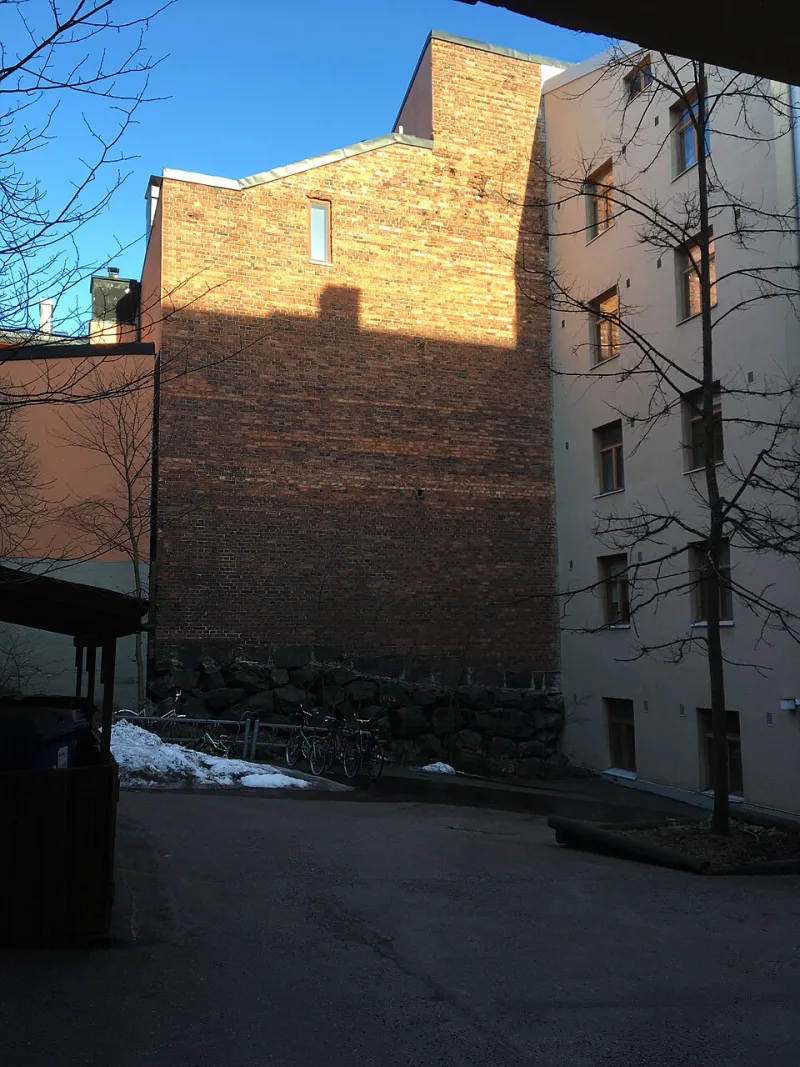
Photo: Eric Fischer, CC BY 2.0, via Wikimedia Commons
There is a moment, roughly four seconds before a comedy gig properly begins, when the audience stops looking at each other and starts looking at the wall. They do not know they are doing it. They are checking the room, sizing up the vibe, deciding whether to unbutton the coat. And what they see behind the microphone — usually brick, often fake, occasionally weeping — tells them more about the night ahead than the compère's opening line ever will.
Britain's comedy clubs have spent forty years trying to look like they were built by Victorians with a grudge and a surplus of clay. Some of them actually were. The rest have bought wallpaper.
The Industrial Accident That Became a Genre Signifier
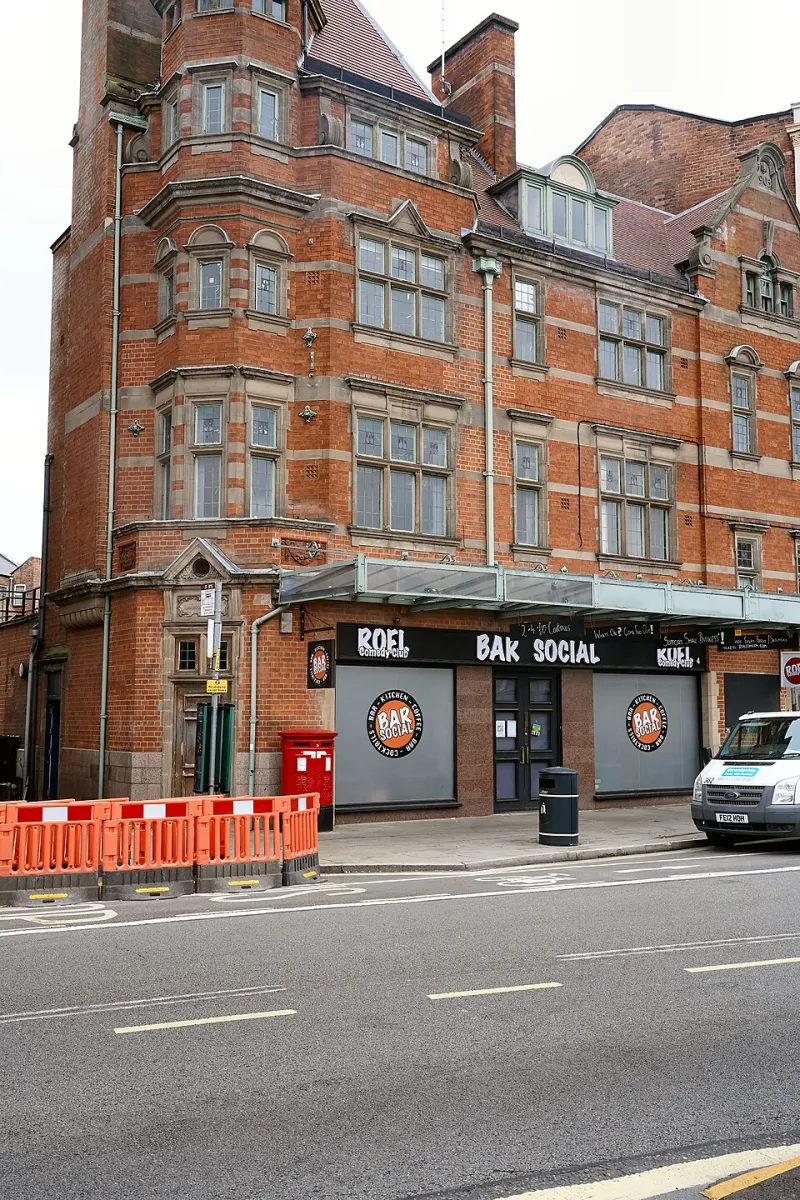
Exposed brick was not designed to signal 'authentic comedy'. It was designed to hold up warehouses, railway arches and textile mills while the people inside coughed themselves into an early grave. Then the mills closed, the rents fell, and someone put a stool and a mic stand in the corner and called it a comedy club. The brick stayed. It was cheaper than plastering.
Somewhere along the way, audiences started reading it as a promise. Brick means intimacy. Brick means the ceiling is low and the beer is warm and the comic might say something they cannot say in a theatre with a foyer and a chandelier. Brick means nobody here is trying to sell you a £9 souvenir programme.
It is nonsense, of course. A comic can die on their arse in front of exposed brick just as easily as in front of a velvet curtain. But the wall does its job. It whispers: this is a room where things happen. It is the architectural equivalent of a mate saying 'trust me'.
Brick Slips and Other Beautiful Lies
The trouble is that real exposed brick is expensive. It needs repointing, it sheds dust into the lighting rig, and it cannot be wiped down after a stag do has used it as a leaning post. So the circuit invented the brick slip: a thin slice of brick glued to a plasterboard wall, often by a man called Kev who has done three of these rooms and has opinions about adhesive.
From the front row, brick slips look convincing. From the side, they look like a wall wearing a costume. And from the green room, where a corner has come loose, they look like what they are: a lie told in masonry.
There is no shame in this. Every comedy club is a lie told in masonry. The important thing is the lie is told with commitment. A venue with a fake brick wall and a real love for comedy will beat a venue with genuine Victorian brickwork and a manager who thinks 'heckle night' is a good idea. The wall is the setting, not the play.
When the Wall Fights Back
The exposed brick wall is also a working surface, and it has the scars to prove it. There are rooms where the brick behind the stage is darker at head height, because four hundred comics have leaned back against it while doing their closing bit. There are rooms where the mortar is held together by Blu Tack, gaffer tape and the residue of a poster for a comic who has since moved to television and would rather you did not mention it.
And then there is the acoustic problem. Brick bounces sound like a drunk uncle at a wedding. In a low room with a hard wall, a heckle does not fade — it circulates. It comes back at the comic from a different angle, slightly angrier, like a wasp with a grievance. The wall is not neutral. The wall is part of the audience.
Pebble-Dash and the Politics of Trying
Not every comedy room gets brick. Some get pebble-dash, that uniquely British exterior finish that looks like a wall that has given up. Some get woodchip wallpaper painted the colour of a pub carpet. Some get a blank white wall with a single poster for a tribute act, which is the visual equivalent of being told to lower your expectations before you have even sat down.
But here is the thing: a pebble-dashed back room in a working men's club can host a better night than a brick-lined basement in Zone 2. The wall does not decide the comedy. The people do. The wall just sets the tone — and sometimes the tone is 'we have spent the entire budget on the PA and the rest is vibes'.
That is the honest story of the circuit. Not every room can afford to look like a heritage site. Most are doing well to have a working door and a stool that does not wobble. The brick, real or glued, is a small act of hope. It says: we want this to feel like somewhere. Somewhere you might come back to.
What the Wall Is Actually Saying
So next time you are sitting in a comedy club, waiting for the support act to finish pretending the audience is warm, have a look at the wall. If it is real brick, thank the Victorians, or at least the landlord who never got round to plastering. If it is brick slips, admire the effort. If it is pebble-dash, admire the honesty.
And if it is a plain white wall with a laminated sign saying 'NO HECKLING', you are in the wrong room. The brick may be fake, but the comedy should not be. The wall is just the warm-up act. The rest is up to whoever is holding the mic.