The Bar-Queue Banger: How Interval Music Quietly Runs a British Comedy Night
There is a moment in every British comedy night when the microphone goes dead, the lights come up half a shade, and the audience is released into the wild. This is the interval. Officially it is ten minutes. Unofficially it is a hostage negotiation conducted over a PA system.
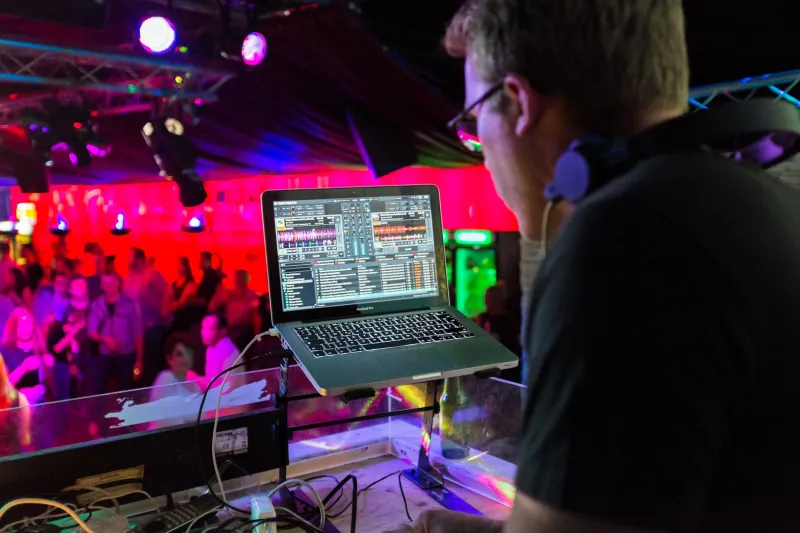
On stage, a comic has spent twenty minutes building a room. In the interval, a sound tech with a laptop and a half-finished lemonade can dismantle it with one cheerful chorus. The music between acts is not background. It is crowd control with a bassline.
The Ten-Minute Tighter
Circuit sound techs have a phrase for the interval: the tighter. Not because it tightens the show, but because it tightens the audience. People who have been sitting in a dark room pretending not to check their phones are suddenly given permission to move, queue, gossip and rethink their second drink. The playlist has to do several jobs at once — keep energy up without stealing focus, move people towards the bar without causing a stampede, and leave the room warm enough for a second act who has not yet earned it.
A venue manager in Leeds describes the ideal interval track as 'something everyone knows and nobody listens to'. That is harder than it sounds. A song the crowd loves can turn the bar into a singalong, which is lovely for morale and dreadful for timing. A song nobody knows creates a strange, floating anxiety, as if the night has been paused by accident.
The safest territory is familiar, mid-tempo and slightly disposable. Think indie-adjacent crowd-pleasers, vintage soul, or the kind of polished pop that makes people nod without forming opinions. The interval is not the place for a deep cut. It is the place for a song that says: keep moving, the night is not over, and yes, the toilets are that way.
Why the Wrong Disco Banger Is a Controlled Explosion
Every compère has a story about an interval record that went off like a firework in a phone box. A 1979 disco banger can be a glorious thing at a wedding, but in a comedy club it can flatten the room. The problem is not the song. The problem is the contract it makes with the audience. Disco says dance. Comedy says sit down and listen. If the PA starts promising a nightclub, the second half arrives with a crowd whose hips have been activated and whose attention has been scattered.
One long-serving sound engineer in Manchester calls it 'the wrong kind of lift'. A record can raise the temperature too early, especially if it lands just as the bar queue has reached the crucial point of no return. People start moving in different rhythms — some towards the bar, some back to seats, some doing that awkward half-dance that British people do when they are not sure whether they are allowed to enjoy themselves. The result is a room that feels busy rather than ready.
The other classic error is the ironic banger: a novelty track or a football anthem dropped in the belief that it will create a laugh. It can work, but only if the room is already on side. If the first half has been patchy, irony reads as panic. The interval playlist should never look like it is trying to rescue the show. That is the compère's job, and they need the audience to be vaguely settled before they do it.
The Sound Desk's Unwritten Rules
Ask anyone who has spent time behind a comedy venue's desk and you will hear a set of rules that seem to exist nowhere in writing. Keep the volume below conversation level but above the point where the room feels dead. Avoid songs with long spoken intros, because they create false starts. Avoid anything with a huge, emotional chorus, because it makes the bar queue feel like a funeral procession. And never, under any circumstances, let the playlist shuffle into the walk-on music for the second half before the compère is ready.
There is also the matter of age. A comedy audience in 2026 is not a monolith. A Friday night crowd might be a works do, a birthday table and three couples who met on a dating app and are trying to look relaxed. The music has to bridge them without patronising any of them. That is why so many venues default to the same broad church of feel-good tracks: they are the municipal hanging baskets of the playlist world. Nobody remembers them, but everybody appreciates them.
The Bar-Queue Economy
The interval is an economy. Every person who joins the bar queue is a person not sitting in their seat, and every minute of queueing is a minute the second half has to work harder. Music affects that economy more than venues like to admit. Tempo matters. A fast record makes people move quickly, which can make the queue look chaotic. A slow record makes people linger, which can make the queue look long. The sweet spot is a steady, mid-paced groove that suggests progress without panic.
Venue managers talk about the 'two-pint problem'. If the first half has been strong, people order a second drink they do not need because they are enjoying themselves. If the interval music is too soothing, they settle into a cosy little bubble and forget the bar exists. If it is too aggressive, they abandon the queue and go back to their seats, which is bad for the till and bad for the atmosphere. The interval playlist is, in its own small way, a sales tool. It is just a sales tool with a chorus.
The Second-Half Reset
The real test of an interval playlist is what happens when the lights go down again. A good interval leaves the room loose but attentive. A bad one leaves it either flat or feral. Compères know this in their bones. They can feel whether the audience has been sent back to their seats or merely released back into them.
In 2026, the tools have changed — streaming queues, shared playlists, the occasional venue still clinging to a CD wallet like a family heirloom — but the principle has not. The interval is not a break from the comedy. It is the comedy's holding pattern. Get it right and the second half starts with a room that has been gently reassembled. Get it wrong and the compère walks out to find a disco in progress and a bar queue that has become a government inquiry.
So next time you are standing in a comedy club with a warm pint and a vague sense that the night has paused, listen to what is playing. Somewhere behind the desk, a sound tech is making decisions that will shape the next hour. And if the PA suddenly drops a 1979 disco banger, pray the room knows how to sit back down.