Last Orders, Last Laughs: How Britain’s Trains Dictate the Comedy Night
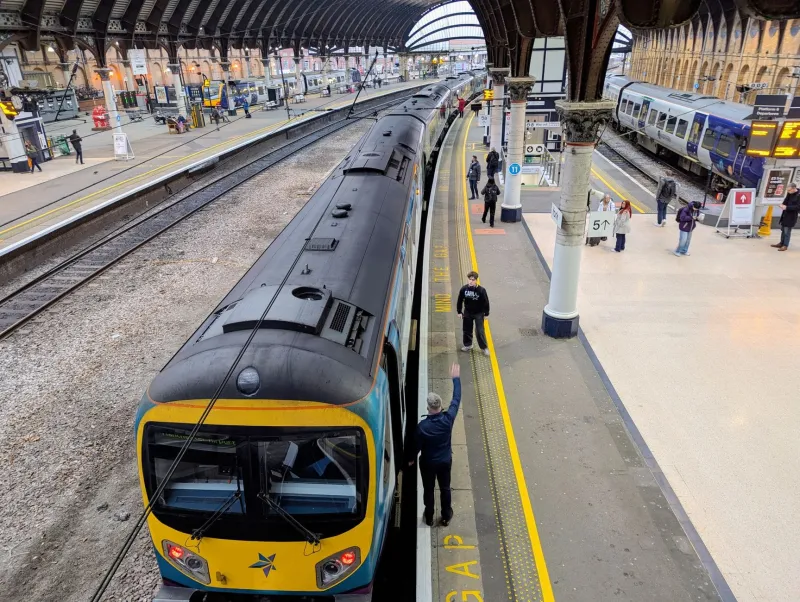
There is a moment, somewhere between the headliner’s closing bit and the venue’s lights coming up, when a British comedy audience stops being an audience and becomes a swarm of people silently calculating train times. You can see it in the eyes. The bloke in the third row is not laughing at the callback; he is wondering whether the 23:14 to Leeds leaves from platform 3 or platform ‘probably not’. The woman near the bar has already opened National Rail and is staring at it like a disappointing scratchcard. The late comedy show is not just a gig. It is a hostage negotiation with public transport.
The Real Headliner Is the 23:14
A comedy bill might say ‘doors 7pm, show 8pm, finishing around 10:30pm’, but every seasoned punter knows that is a work of speculative fiction. The compère has to warm up a room that is still queuing for the loo. The middle act has to win back the people who have just been reminded by a text that their bus replacement service starts at 10:40. The headliner has to deliver 40 minutes of tightly honed material while pretending not to notice the growing exodus caused by a perfectly timed last train.
Venue curfews are the invisible co-promoters of British comedy. A room above a pub might have a 10:30pm cut-off because the neighbours have views. A proper club might have a licence that turns into a pumpkin at 11pm. A theatre might be stricter than a headmaster. Comics learn to read the room’s body language like weather forecasts: coats on laps means trouble; handbags zipped means the first wave is leaving; someone whisper-shouting ‘we’ve got a train’ is the comedy equivalent of a fire alarm.
This is why the late show has its own strange alchemy. It can be looser, louder and more feral than the early one. It can also be a race against Avanti, Northern, TransPennine and the unexplained bus that only appears on Tuesdays. The material does not change, but the stakes do. Every laugh has to land before the last connection leaves.
The Taxi-Queue Economy
Then comes the great British post-show ritual: the taxi queue. It is a social experiment with no ethics approval. You have the organised couple who booked a cab at 9pm and are now smugly gliding past everyone. You have the group of lads who insist it is ‘only a 25-minute walk’ and will be seen 40 minutes later still arguing outside a kebab shop. You have the lone punter refreshing a ride-hailing app and watching the price surge like a heart monitor.
In London, the Night Tube is a blessed exception, though it does not cover every line, every night or every bit of Zone 6 where the comedy club is actually located. In Manchester, Leeds, Birmingham, Glasgow and Bristol, the taxi queue is a leveller. Headliner, student, promoter, bloke who laughed at the wrong bit: everyone waits together. The economy of the late gig is built on shared cabs, cash for the driver and the unspoken agreement that nobody mentions how much the surge price was until the following morning.
A good compère can work the queue into the show. A great one can make the room feel like the last train is part of the joke rather than the enemy of it. ‘You’ve got ten minutes before you all turn into pumpkins’ is not a threat; it is a service announcement with a punchline.
Why Comics Love and Loathe the Graveyard Slot
The graveyard slot is a double-edged pint. Late audiences are often warmer, sillier and more willing to go wherever the comic wants, because they have already committed to being out. They have paid a babysitter. They have missed the easy bus. They are in it for the long haul, or at least until the venue staff start stacking chairs.
But the late show is also where comics learn humility. You can have a brilliant set and still watch half the room sprint for the door because the 23:02 is the only train that stops at their village. You can nail a closing routine and hear it land on the backs of people putting on coats. You can be funny and still lose to a timetable. The graveyard slot teaches comics timing in the most literal sense.
And yet they keep doing it. Because when a late room locks in, it can be magic. The early show is a trial; the late show is a party. The audience is looser, the heckles are stranger and the post-gig pub debrief is richer. Nothing bonds a room like the shared terror of missing the last train.
A Survivor’s Checklist
First, check the last train before you buy the ticket. Not after. Before. A £15 comedy ticket is not a bargain if the only way home is a £48 taxi and a kebab you did not want.
Second, know the venue’s reputation. Some rooms are famously brisk; some will happily run until the staff start yawning loudly. Ring ahead if you must. Promoters would rather answer a question than mop up a stranded punter.
Third, if you are in a group, agree a taxi plan before the show. The post-gig group chat is not the time to discover that everyone lives in different postcodes and nobody has cash.
Fourth, do not be the person who leaves during the headliner’s final story because you think you can make a connection you cannot make. You will not make it. You will simply become a anecdote the comic tells in another town.
Finally, embrace the pub debrief. The late-night comedy night does not end when the mic goes down. It ends in a slightly sticky pub, with a pint you did not need, arguing about which act was best and whether the compère was brave or reckless. That is the real encore. Just keep one eye on the clock.